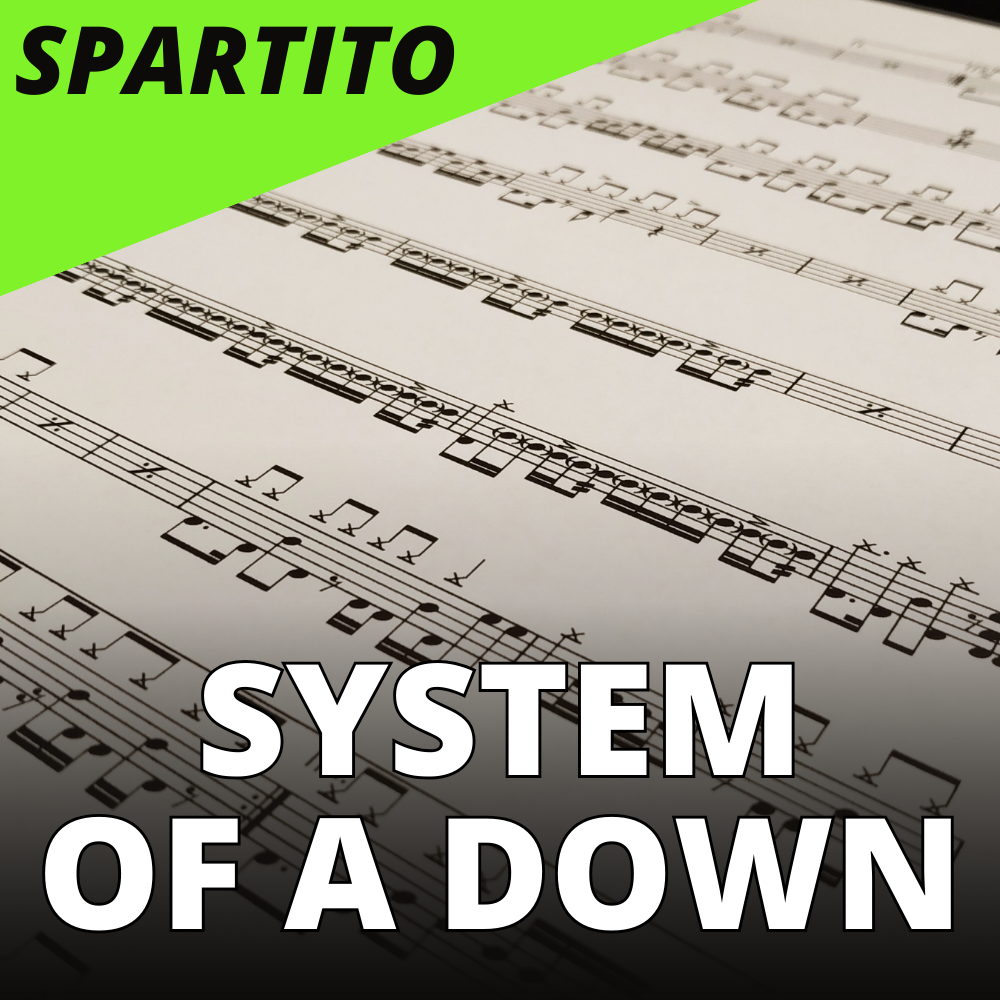


System of down - Science (drum sheet music)
System of down - Science (drum sheet music)
Impossibile caricare la disponibilità di ritiro
🇮🇹 System of a Down – Science
Scheda brano
Titolo: Science
Artista: System of a Down
Album: Toxicity (2001)
Autori: Daron Malakian, Serj Tankian, Shavo Odadjian, John Dolmayan
Genere: Alternative Metal / Nu Metal / Experimental Rock
Durata: 2:43
Etichetta: American Recordings / Columbia Records
Produzione: Rick Rubin, Daron Malakian
Identità sonora.
“Science” è uno dei brani più nervosi e “a scatti” di Toxicity, un pezzo che sembra costruito apposta per destabilizzare l’ascoltatore. Il sound è secco, tagliente, iper-ritmico, con chitarre distorte che lavorano per riff spezzati e sincopati, alternando momenti compressi e improvvise aperture. È uno dei classici esempi di estetica SOAD: aggressività metal, ironia, teatralità e una struttura che non vuole essere comoda. È un brano che ti tiene sempre in tensione, come se il pavimento si muovesse sotto i piedi.
Significato e narrazione.
Il testo è una critica provocatoria al modo in cui la scienza e il sapere possono diventare dogma, controllo o giustificazione di scelte disumane. La frase “Science has failed our world” è una dichiarazione forte, quasi scandalosa, ma non è un rifiuto della conoscenza: è una denuncia del suo uso distorto, quando la razionalità si separa dall’etica e dalla coscienza. Come spesso nei SOAD, il messaggio è più emotivo che didascalico: un urlo contro l’ipocrisia e contro l’idea che il progresso tecnico sia automaticamente progresso umano.
Architettura musicale.
La struttura è costruita su un continuo alternarsi di sezioni. Le strofe sono tese, spezzate, con frasi vocali che entrano e escono in modo quasi percussivo. Il ritornello non è “melodico” nel senso tradizionale: è un punto di intensificazione, un’esplosione ritmica che spinge ancora di più. Il brano è pieno di stop, ripartenze e cambi di dinamica, ma mantiene sempre un filo conduttore chiaro grazie al riff portante. È una canzone che funziona come un montaggio rapido: tagli netti, immagini forti, nessuna pausa comoda.
Atmosfera strumentale.
L’arrangiamento è essenziale e aggressivo. Le chitarre sono protagoniste con riff spezzati e ripetitivi, quasi come se fossero colpi di lama. Il basso segue compatto, aumentando il peso e la pressione, mentre le voci sono parte integrante della ritmica: gridate, melodiche, teatrali, sempre in funzione del contrasto. L’atmosfera è frenetica, paranoica, quasi claustrofobica, con quella sensazione tipica dei SOAD di caos controllato che diventa identità sonora.
Groove e batteria.
La batteria in “Science” è un lavoro di precisione e reattività. Il groove è aggressivo e serrato, con cassa e rullante che si incastrano con il riff in modo molto tight. L’hi-hat è spesso chiuso e tagliente, usato per mantenere la tensione e accentare i punti chiave, mentre i crash arrivano come colpi secchi per aprire le sezioni più esplosive. I fill sono brevi, nervosi, spesso funzionali agli stacchi e alle ripartenze. Qui la batteria non deve “accompagnare”: deve essere parte del riff, come un quarto strumento melodico ma fatto di colpi.
Valore didattico per il batterista.
Studiare “Science” è perfetto per allenare precisione ritmica, stop & go e coordinazione in un contesto alternative metal complesso. Il brano richiede tempo stabile, colpi forti e puliti e soprattutto capacità di rimanere incollati alla chitarra senza perdere controllo. È ideale per lavorare su tightness, gestione degli accenti, crash management e lettura delle sezioni spezzate. Una lezione fondamentale: nei System of a Down, la batteria non deve solo essere potente… deve essere intelligente e chirurgica.
🇬🇧 System of a Down – Science
Track details
Title: Science
Artist: System of a Down
Album: Toxicity (2001)
Songwriters: Daron Malakian, Serj Tankian, Shavo Odadjian, John Dolmayan
Genre: Alternative Metal / Nu Metal / Experimental Rock
Length: 2:43
Label: American Recordings / Columbia Records
Production: Rick Rubin, Daron Malakian
Sound identity.
“Science” is one of the most nervous, jagged tracks on Toxicity — a song designed to destabilize the listener. The sound is dry, sharp and hyper-rhythmic, built on distorted guitars playing broken, syncopated riffs that shift between tight compression and sudden openings. It’s classic SOAD aesthetics: metal aggression, irony, theatrical delivery, and a structure that refuses comfort. The track keeps you constantly tense, as if the floor is moving under your feet.
Meaning and narrative.
The lyrics offer a provocative critique of how science and knowledge can become dogma, control, or justification for inhuman choices. “Science has failed our world” is a shocking statement, but it’s not a rejection of knowledge — it’s a condemnation of its distorted use, when rationality disconnects from ethics and conscience. Like many SOAD songs, the message is emotional rather than explanatory: a scream against hypocrisy and against the idea that technical progress automatically equals human progress.
Musical architecture.
The structure is built on constant section switching. Verses feel tense and chopped, with vocal phrases entering and exiting in a percussive way. The chorus isn’t “melodic” in a traditional sense — it’s an intensity peak, a rhythmic explosion that pushes harder. The track is full of stops, restarts and dynamic shifts, yet stays coherent thanks to its central riff. It works like fast editing: sharp cuts, strong images, no comfortable pauses.
Instrumental atmosphere.
The arrangement is essential and aggressive. Guitars dominate with broken, repetitive riffs that feel like blade strikes. Bass stays locked in, adding weight and pressure, while vocals become part of the rhythm: shouted, melodic, theatrical, always serving contrast. The atmosphere is frantic, paranoid and claustrophobic, with SOAD’s signature controlled chaos as the main identity.
Groove and drumming.
Drums in “Science” are all about precision and fast reaction. The groove is tight and aggressive, with kick and snare locking into the riff with extreme tightness. Hi-hat is often closed and sharp, used to keep tension and accent key points, while crashes hit like sudden punches to open explosive sections. Fills are short and nervous, mainly supporting stops and restarts. Here, drums don’t just “accompany” — they become part of the riff, like a melodic instrument made of hits.
Educational value for drummers.
“Science” is outstanding study material for rhythmic precision, stop-and-go control and coordination in complex alternative metal. It demands steady time, strong clean strokes and the ability to stay glued to the guitar without losing control. Ideal for practicing tightness, accent placement, crash management and reading chopped sections. A key lesson: in System of a Down, drums must not only be powerful — they must be smart and surgical.
Share