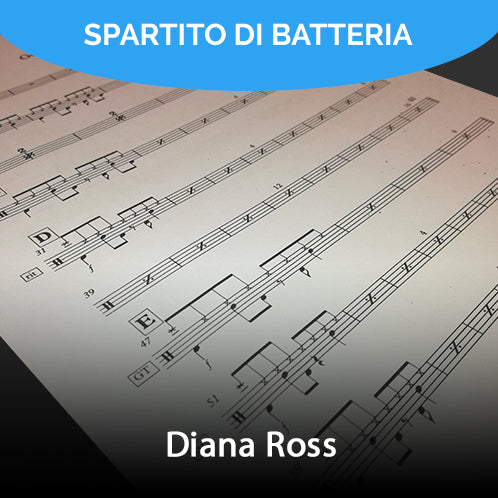


Diana Ross - I'm coming out (drum sheet music)
Diana Ross - I'm coming out (drum sheet music)
Impossibile caricare la disponibilità di ritiro
🇮🇹 Diana Ross – I’m Coming Out
Scheda brano
Titolo: I’m Coming Out
Artista: Diana Ross
Album: Diana (1980)
Autori: Nile Rodgers, Bernard Edwards
Genere: Disco / Funk / Pop
Durata: 5:23 (album version)
Etichetta: Motown Records
Produzione: Nile Rodgers, Bernard Edwards
Identità sonora.
“I’m Coming Out” è uno dei brani più luminosi, energici e iconici della storia della disco music. Pubblicato nel 1980, rappresenta l’incontro perfetto tra la voce elegante di Diana Ross e il groove inconfondibile del duo Rodgers–Edwards. Il sound è solare, potente e sofisticato: una sezione ritmica funk-disco impeccabile, chitarre in levare precisissime, basso elastico e una produzione cristallina che ancora oggi suona modernissima. È una canzone che comunica immediatamente libertà, celebrazione e movimento.
Significato e narrazione.
Il testo parla di affermazione di sé, rinascita e orgoglio personale. “I’m coming out” è una dichiarazione pubblica: mostrarsi per ciò che si è, senza maschere né compromessi. Pur non nascendo esplicitamente come manifesto, il brano è diventato nel tempo un inno universale di emancipazione e identità, soprattutto per la comunità LGBTQ+. Diana Ross interpreta il messaggio con gioia, sicurezza e leggerezza, trasformando una presa di coscienza personale in una festa collettiva.
Architettura musicale.
La struttura del brano è un modello di efficacia pop-disco. L’introduzione è immediatamente riconoscibile e mette subito in moto il groove. Le strofe scorrono fluide, lasciando spazio alla voce e alla sezione ritmica, mentre il ritornello si apre in modo esplosivo, diventando uno dei più memorabili della musica dance. Il bridge aggiunge varietà senza spezzare il flow, mantenendo costante l’energia fino alla fine. È una struttura pensata per sostenere il ballo dall’inizio all’ultimo secondo.
Atmosfera strumentale.
L’arrangiamento è una lezione di equilibrio e raffinatezza. Il basso di Bernard Edwards è protagonista assoluto: funky, rotondo, sempre in movimento. La chitarra di Nile Rodgers è secca, precisa, chirurgica nel suo lavoro in levare. I fiati aggiungono brillantezza e carattere, mentre tastiere e archi amplificano il senso di festa e grandezza. Ogni elemento è perfettamente incastrato, creando un sound pieno ma mai eccessivo.
Groove e batteria.
La batteria è il cuore pulsante del brano. Il groove è dritto, energico e irresistibile, con una cassa regolare che sostiene il ballo e un rullante brillante che definisce il backbeat disco. L’hi-hat è costante, aperto nei punti giusti per dare respiro e movimento. Non ci sono virtuosismi: tutto è finalizzato a mantenere il groove stabile, solido e trascinante. È una batteria che non cerca protagonismo, ma rende impossibile stare fermi.
Valore didattico per il batterista.
Studiare “I’m Coming Out” è fondamentale per chi vuole comprendere il linguaggio disco-funk. Il brano richiede precisione assoluta, resistenza fisica e grande controllo del tempo. È ideale per lavorare su cassa costante, hi-hat regolare, gestione del backbeat e interazione con basso e chitarra funk. Insegna una lezione chiave: il groove non deve stupire, deve convincere. Un classico imprescindibile per ogni batterista.
🇬🇧 Diana Ross – I’m Coming Out
Track details
Title: I’m Coming Out
Artist: Diana Ross
Album: Diana (1980)
Songwriters: Nile Rodgers, Bernard Edwards
Genre: Disco / Funk / Pop
Length: 5:23 (album version)
Label: Motown Records
Production: Nile Rodgers, Bernard Edwards
Sound identity.
“I’m Coming Out” is one of the brightest, most energetic and iconic disco songs ever recorded. Released in 1980, it perfectly captures the synergy between Diana Ross’s elegant voice and the unmistakable groove of Nile Rodgers and Bernard Edwards. The sound is joyful, powerful and refined: a flawless disco-funk rhythm section, razor-sharp guitar upstrokes, elastic bass lines and a crystal-clear production that still sounds contemporary today. It’s a track that immediately communicates freedom, celebration and motion.
Meaning and narrative.
The lyrics speak about self-affirmation, rebirth and pride. “I’m coming out” is a public declaration of authenticity — revealing who you truly are without compromise. Although not originally conceived as a manifesto, the song became a universal anthem of empowerment and identity, especially within the LGBTQ+ community. Diana Ross delivers the message with joy, confidence and lightness, turning personal realization into a collective celebration.
Musical architecture.
The structure is a model of disco-pop efficiency. The instantly recognizable intro launches the groove right away. Verses flow smoothly, leaving space for vocals and rhythm, while the chorus bursts open with one of the most memorable hooks in dance music history. The bridge adds variation without breaking momentum, keeping the energy alive through the final section. Everything is designed to sustain movement from start to finish.
Instrumental atmosphere.
The arrangement is a masterclass in balance and sophistication. Bernard Edwards’ bass is a central voice — funky, round and constantly in motion. Nile Rodgers’ guitar is sharp, clean and rhythmically precise. Horns add brightness and character, while keyboards and strings enhance the sense of scale and celebration. Every element fits perfectly, creating a full yet uncluttered sound.
Groove and drumming.
The drums are the driving force of the track. The groove is straight, energetic and irresistible, built on a steady kick pattern and a crisp disco backbeat. The hi-hat remains consistent, opening strategically to add air and movement. There are no flashy fills — everything serves groove stability and danceability. This is drumming designed to make people move.
Educational value for drummers.
“I’m Coming Out” is essential study material for drummers exploring disco-funk vocabulary. It develops timing precision, endurance and groove consistency. Perfect for practicing steady kick patterns, hi-hat control, backbeat placement and tight interaction with bass and guitar. The song teaches a crucial lesson: groove doesn’t need complexity — it needs conviction.
Share