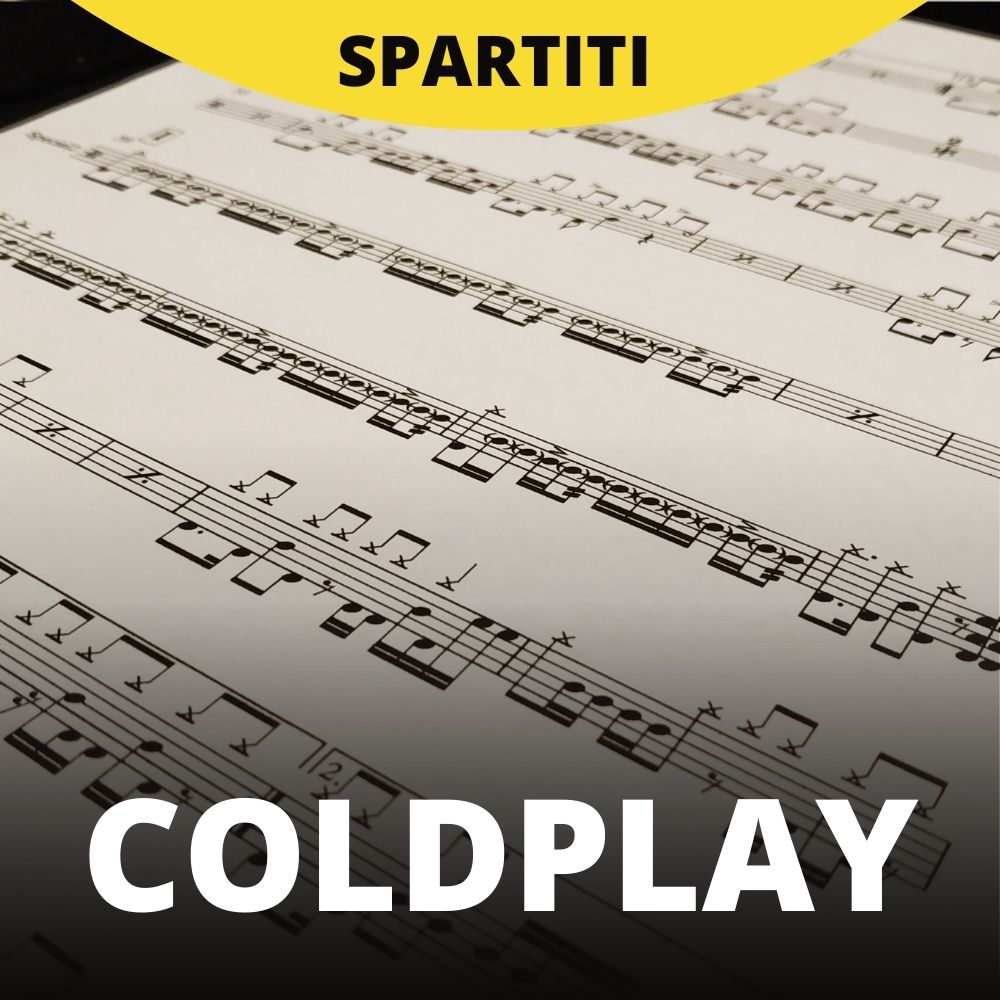


Coldplay - Clocks (drum sheet music)
Coldplay - Clocks (drum sheet music)
Impossibile caricare la disponibilità di ritiro
🇮🇹
Titolo: Clocks
Artista: Coldplay
Album: A Rush of Blood to the Head (2002)
Autori: Chris Martin, Jonny Buckland, Guy Berryman, Will Champion
Genere: Alternative Rock / Piano Rock / Art Pop
Durata: 5:07
Etichetta: Parlophone
Produzione: Coldplay, Ken Nelson
Identità sonora: “Clocks” è uno dei brani più riconoscibili dei Coldplay, costruito attorno a un riff di pianoforte ipnotico, circolare, che sembra muoversi come un ingranaggio perfetto. È un pezzo che unisce minimalismo e profondità emotiva, con un sound etereo, sospeso, alimentato da delay, arpeggi e atmosfere che evocano un senso di corsa contro il tempo. È diventato uno dei simboli della band: luminoso, pulsante, immediatamente identificabile.
Significato e narrazione: Il testo è una riflessione sul tempo — come scivola, come ci inseguiamo dentro di esso, come a volte ci schiaccia e altre volte ci offre una via d’uscita. Il brano comunica urgenza, confusione, ricerca, con frasi brevi che sembrano illuminazioni improvvise nel mezzo del caos. “Am I part of the cure, or am I part of the disease?” è una delle domande emblematiche della poetica dei Coldplay: intima, universale, irrisolta.
Architettura musicale: La struttura di “Clocks” è costruita come una spirale: il famoso riff di pianoforte non è solo un tema melodico, ma l’ossatura che regge l’intero brano. Le strofe sono leggere, quasi liquide, mentre il ritornello si apre con un’esplosione emotiva che non perde mai eleganza. La progressione armonica in loop crea un senso di movimento continuo, quasi respiratorio, che rende il brano ipnotico ma mai monotono.
Atmosfera strumentale: Il pianoforte è la stella, brillante e in primo piano, ma tutto il resto contribuisce a creare un ambiente sonoro denso e raffinato: le chitarre con ritardi lunghi, il basso profondo e rotondo, i pad sottili che riempiono l’aria senza farsi notare. La voce di Chris Martin, delicata e urgente allo stesso tempo, attraversa questo paesaggio come un raggio di luce che tenta di farsi strada tra le nuvole.
Groove e batteria: La batteria di Will Champion è uno degli elementi chiave che trasformano “Clocks” da semplice esercizio pianistico in un brano epico. Il groove è elastico, potente ma controllato, con un rullante ampio e riverberato che crea profondità, e una cassa posizionata in modo da spingere il tempo in avanti senza mai ingolfare la tessitura sonora.
L’hi-hat è usato con prudenza, spesso aperto quel tanto che basta a dare respiro al loop del pianoforte. I fill sono rari ma incisivi, spesso costruiti su tom bassi che amplificano la dimensione “spaziale” del brano. È un pezzo ideale per studiare pocket, controllo del suono, resistenza, e soprattutto l’arte di far crescere un brano mantenendo la stessa frase ritmica.
Impatto artistico: “Clocks” è uno dei brani più celebrati dei Coldplay e vinse il Grammy Award per la “Record of the Year” nel 2004. La sua impronta nel pop moderno è enorme: ha ispirato decine di band, spot pubblicitari, colonne sonore e generazioni di pianisti. È considerato uno dei capolavori della musica alternativa dei primi anni 2000.
🇬🇧
Title: Clocks
Artist: Coldplay
Album: A Rush of Blood to the Head (2002)
Songwriters: Chris Martin, Jonny Buckland, Guy Berryman, Will Champion
Genre: Alternative Rock / Piano Rock / Art Pop
Length: 5:07
Label: Parlophone
Producer: Coldplay, Ken Nelson
Sound identity: “Clocks” is built around one of the most iconic piano riffs of the 21st century — a looping, hypnotic figure that feels like the turning of gears or the ticking of an internal clock. The track merges minimalism and emotional grandeur, delivering a sound that is bright, airy and unforgettable.
Meaning and narrative: Lyrically, “Clocks” contemplates the passing of time and the human struggle to keep up with it. The questions are urgent, existential, and unresolved. The song captures both disorientation and hope, echoing that moment when you feel lost yet strangely illuminated.
Musical architecture: The song unfolds like a spiral. The piano riff is not just a motif — it’s the architectural frame of the entire piece. Verses remain fluid and understated, while the chorus expands with emotional lift and harmonic clarity. The constant harmonic loop gives the track a sense of forward motion and inevitability.
Instrumental atmosphere: The piano leads the way, but the guitars with long delays, the deep bass and the subtle pads create a lush, immersive soundscape. Chris Martin’s voice moves delicately within this environment, fragile yet full of urgency, giving the track its emotional signature.
Groove and drum approach: Will Champion’s drum part anchors the song with power and restraint. The groove is wide, impactful and steady, driven by a resonant snare and a precise kick that keeps the momentum alive. The hi-hat work is minimal but expressive, allowing space for the piano riff to breathe.
Fills are sparse but meaningful, often emphasizing transitions with deep toms. For drummers, “Clocks” is a masterclass in time feel, dynamic consistency, atmospheric playing and the subtle art of supporting a repetitive harmonic structure without letting it feel static.
Artistic impact: Winner of the Grammy for “Record of the Year,” “Clocks” remains one of Coldplay’s defining works. Its influence on modern pop and alternative music is undeniable, and its piano motif has become a generational symbol — instantly recognizable, endlessly evocative.
Share